

Acute Otitis Media
Acute Otitis Media Overview
Acute otitis media is a condition in which viruses, bacteria, or other pathogens invade the middle ear (the internal space between the eardrum and the cochlea) and cause inflammation.
Acute Otitis Media Diagnosis & Testing
If children pull on their ears or frequently touch them while complaining of pain, acute otitis media may be suspected.
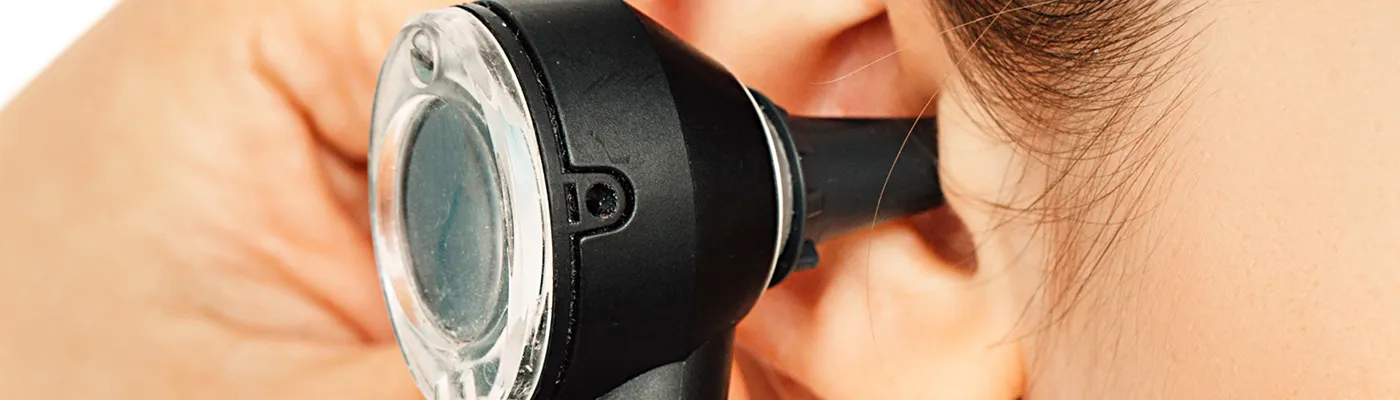
Prosecutor Lee Kyung : Examine the eardrum using bright lighting and a magnifying glass
Airway Patency Examination : Observation of Eardrum Movement
Acute Otitis Media Treatment
Stabilization Therapy
Administration of Antibiotics and Topical Ear Solutions
Administration of anti-inflammatory analgesics and nasal decongestants
Treatment for a Perforated Eardrum or Eardrum Puncture
Tonsillectomy or Adenoidectomy
Otitis Media Treatment System
01
Diagnosis
Check for Rhinitis
- Intranasal Examination
- Nasal Endoscopy
- Sinus X-ray
- Allergy Testing
02
PLAN
When Surgery Is Necessary
- Intranasal Airflow Test
- Olfactory Test
- Blood Test
- Urinalysis
- Electrocardiogram (ECG) Test
03
Surgery
1 DAY System
- Same-Day Admission, Surgery, and Discharge
- High-Frequency Surgical Equipment
- (Used in Sutter, Germany)
- Use of CO2 Laser Surgical Equipment
04
Postoperative Care
Preventing Recurrence
- Visit the clinic twice a week for the first 3 weeks after surgery
- After that, please visit the clinic depending on your condition
- Regular checkups twice a year
Otitis Media Types of Surgery and Their Effects
- This surgery is performed when inflammation is confined to the eardrum or the middle ear; it is conducted under local anesthesia and takes about one hour.
- This surgery is performed in cases of severe inflammation. It is conducted under general anesthesia and takes about 2 hours. Depending on the condition of the ear, the procedure may be performed through the ear canal (external auditory canal) without leaving a large external scar, or through an incision behind the ear.
By reducing inflammation
Prevents oozing.
Reconstruct the eardrum
It prevents bacterial invasion.
Keeping the inside of your ear clean
I will maintain it.
Hearing
We are making improvements.
Otitis Media Surgical Outcomes
Patients can be discharged the same day for procedures performed under local anesthesia, while those requiring general anesthesia will need to stay in the hospital for about 1 to 2 days.
Available starting one week after surgery
Complete regeneration occurs 4 to 6 weeks after surgery. However, depending on the type of surgery, a longer period may be required.
If a laryngoplasty is performed at the same time, discharge may occur for up to 3 months after surgery.
In cases where the inflammation is not severe, hearing can usually be restored with a single surgery; however, in cases of severe inflammation, surgery to remove the inflammation may be performed first, followed by surgery to improve hearing. This second surgery to improve hearing is typically performed under local anesthesia at least six months after the initial surgery.
After surgery Important Notes
Hearing usually recovers after surgery, but in less than 3% of patients, hearing may actually deteriorate further after surgery. Occasionally, persistent ear discharge, tinnitus, and dizziness may occur.
Temporary facial nerve paralysis may also occur.
If you experience mild pain inside or around your ear, or if the discharge worsens, consult a doctor immediately.
Please don't hesitate to ask any questions you may have about ear discomfort. We hope you maintain healthy ears through proper diagnosis and treatment.